

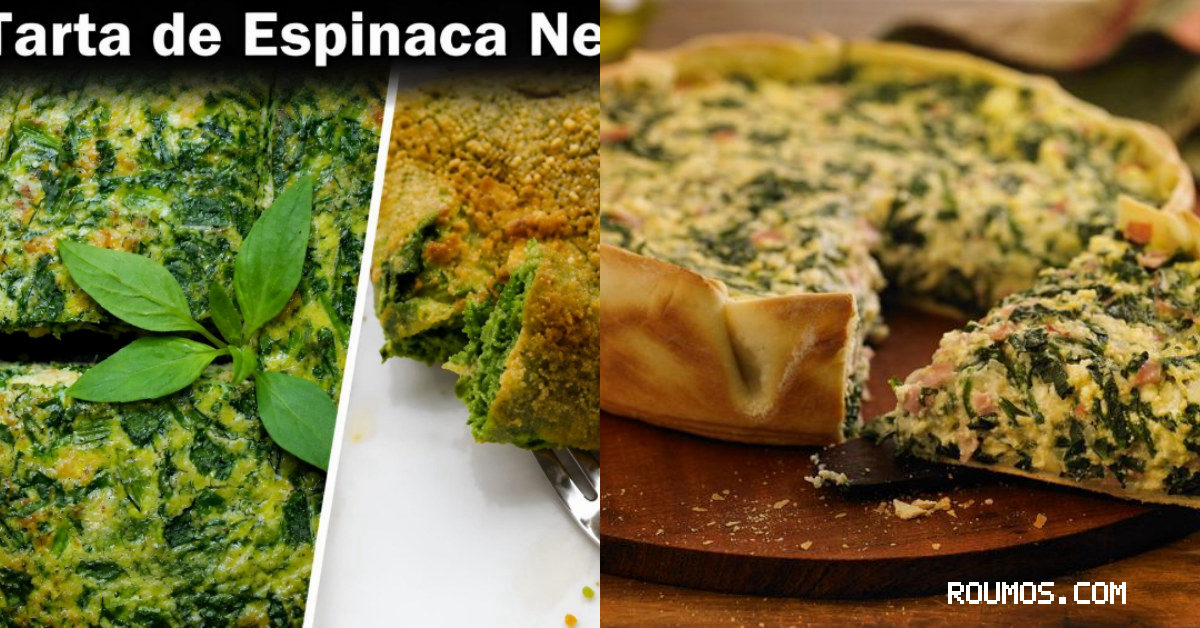
Tarta de espinaca is a savory spinach pie that has anchored lunch counters across Argentina, Uruguay, and Spain for generations. A proper slice pairs a flaky pastry crust with a filling of eggs, onion, and cheese, often brightened with nutmeg or ricotta. Unlike quiche, the filling is lighter and less custard-heavy, which is why bakeries can sell it at room temperature without losing texture.
How to Spot a Fresh Slice Before You Buy
The freshest versions appear by late morning, when bakers pull them from the oven and let them cool just enough to set the filling. Look for a golden, slightly puffed crust and a filling that holds its shape when lifted — a soggy bottom or cracked top often signals it has sat for hours.
Ask whether the tart was made that day. Many casual casas de comidas prepare a single batch each morning, and once it sells out, they do not make more until the next day. If you arrive after 2 p.m., you may find only reheated slices, which lose the delicate flakiness that makes the dish worth seeking out. You may also want to check Best Budget Gaming Chairs: 2024 Picks Under $200 for a different perspective on similar ground
Check the edges of the crust. A well-made tarta de espinaca has a crimped or braided border, a sign the baker took time to seal the pastry properly. Mass-produced versions often skip this detail, leaving a plain, uneven edge that can tear when cut.
What the Search Results Actually Tell You
Typing “best tarta de espinaca near me” into Google returns a mix of local bakery menus and Google Business listings, but no single global winner exists. Rankings shift by neighborhood and by how recently reviewers posted, so a top spot in one search may not appear at all a few blocks away. The more useful approach is to filter for venues with recent photos and a rating above four stars, then read the most recent reviews for mentions of freshness.
Seasonal spikes complicate the picture. Search interest for tarta de espinaca tends to climb during Lent and the weeks before Easter, when many households skip meat on Fridays. Bakeries in predominantly Catholic areas often increase production during those periods, which means more options — but also more competition for the early batch.
Independent pastry shops dominate the category. No single chain controls the market, so quality varies widely even within the same city. A small panadería that has been in business for decades may produce a version with a buttery, hand-rolled crust, while a newer café might rely on frozen pastry shells. Reading between the lines of reviews helps: look for words like “casera” (homemade) or “masa fina” (thin crust) to gauge the style.
Tools and Platforms That Help You Choose
Google Maps remains the most practical tool for a quick search, because it aggregates photos, hours, and directions in one view. Filter by “Open now” and sort by rating, then tap on a listing to see if the owner has posted pictures of the actual tarta. Photos taken by customers are often more honest than professional shots, since they show the real portion size and crust color.
Yelp and TripAdvisor offer deeper review text, though coverage varies by region. In Argentina, local apps like PedidosYa and Rappi list many bakeries that do not appear on international platforms, and their menus often include tarta de espinaca with a price per slice. As of 2025, a single slice in Buenos Aires typically costs between 2,000 and 4,000 Argentine pesos, depending on the neighborhood and whether it includes a side salad. com/best-tarta-de-espinaca-near-me/” rel=”noopener noreferrer” target=”_blank”>Best Tarta de Espinaca Near Me: A Comprehensive Guide to Finding the …
For home cooks, the reference point remains Doña Petrona, the influential cookbook author whose recipes have shaped Argentine home baking since the 1930s. Her tarta de espinaca method — pre-cooking the spinach, squeezing out excess water, and mixing it with béchamel — is still the baseline many bakers follow. Knowing that technique helps you judge a bakery version: if the filling tastes watery or bland, the cook likely skipped the squeeze step.
Why This Pie Carries Cultural Weight
Tarta de espinaca is not just a menu item; it is a workday institution. In Buenos Aires, office workers grab a slice with a drink for lunch, and parents pack it into viandas, the packed lunches that fuel schoolchildren and shift workers alike. The pie’s portability and room-temperature stability make it ideal for eating at a desk or on a park bench, which is why it appears in nearly every casa de comidas.
The Spanish connection runs deep as well. In Andalusia, similar pies go by the name pastel de espinacas, often sold in bakeries alongside empanadas and other savory pastries. The filling may include pine nuts or raisins, a nod to Moorish influences that Argentine versions rarely adopt. That regional variation means a traveler searching for tarta de espinaca in Spain will find a different — but equally delicious — interpretation.
Health-conscious eaters have also embraced the dish. Spinach provides iron, and when paired with eggs and cheese, the pie becomes a protein-rich meal that satisfies without heaviness. Food blogs frequently highlight this nutritional angle, though the butter in the crust offsets some of the health benefits. The weaker claim here is that tarta de espinaca is a diet food; it is better described as a balanced comfort food that happens to include vegetables.
Frequently Asked Questions
Who typically makes tarta de espinaca in Argentina?
Home cooks and small bakeries are the primary makers. In Buenos Aires, panaderías and confiterías prepare it daily, while families often bake it for Sunday lunches or weekday viandas. Large industrial bakeries exist but rarely match the quality of a neighborhood shop.
Is it true that tarta de espinaca is always served cold?
No, that is a misconception. While it is often sold at room temperature, many Argentines prefer it warm, straight from the oven. Bakeries typically let it cool to set the filling, but reheating a slice at home for a few minutes in a conventional oven restores the flaky crust.
How many calories are in a typical slice of tarta de espinaca?
Calorie counts vary widely by recipe, but a standard slice from a bakery might range from 300 to 500 calories, depending on the amount of cheese and butter in the crust. Homemade versions with reduced cheese or a whole-wheat crust can be lighter, though no official database covers every variation.
How does tarta de espinaca differ from a spinach quiche?
The main difference lies in the filling. Quiche uses a custard of cream and eggs that bakes into a soft, rich texture, while tarta de espinaca relies on eggs as a binder with less liquid. The crust also differs: tarta often uses shortcrust or puff pastry, whereas quiche typically has a buttery tart shell.
When did tarta de espinaca become popular in Argentina?
The dish gained traction in the mid-20th century, alongside the rise of cookbooks like Doña Petrona’s, first published in the 1930s. By the 1950s, tarta de espinaca was a common feature in Buenos Aires lunch spots, and it has remained a staple ever since.
