

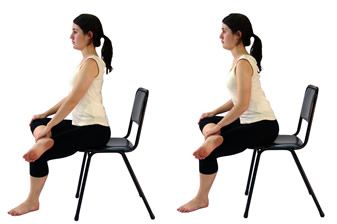
Say Goodbye to Sciatic Nerve Pain in Just 10 Minutes with This Natural Method is one of the most debilitating forms of physical discomfort, affecting millions of people worldwide every year. Characterized by a sharp, shooting pain, burning sensation, or numbness that originates in the lower back and travels down through the buttock and into the leg, sciatic nerve pain can instantly halt your daily routine. When an acute flare-up strikes, finding rapid, reliable relief becomes an urgent priority.
While long-term recovery often involves addressing underlying structural issues with medical professionals, targeted natural intervention can significantly decompress the nerve and reduce acute inflammation. By utilizing a simple, 10-minute natural decompression protocol, you can gently alleviate pressure on the sciatic nerve, soothe surrounding muscle spasms, and regain your mobility safely at home.
Understanding Sciatica: Why the Nerve Gets Compressed
To effectively resolve sciatic nerve pain, it is essential to understand what causes it. The sciatic nerve is the longest and thickest nerve in the human body, running from the lower lumbar spine down through the hips, buttocks, and legs. Sciatica itself is not a condition, but rather a symptom of an underlying issue that compresses or irritates this primary nerve pathway.
       +-------------------------------------------------------+
       |   Lumbar Spine (Lower Back - L4/L5 & S1 Vertebrae)   |
       +-------------------------------------------------------+
                                   |
                                   v
             [ Compression Point: Piriformis Muscle / Disc ]
                                   |
                                   v
       +-------------------------------------------------------+
       |   Sciatic Nerve Pathway (Buttock -> Thigh -> Calf)    |
       +-------------------------------------------------------+
Common Triggers of Sciatic Irritation
- Piriformis Syndrome: The piriformis muscle, located deep within the buttock near the top of the hip joint, can become tight, inflamed, or spasmed, directly pinching the sciatic nerve that runs underneath or through it.
- Lumbar Disc Herniation or Bulge: A bulging or herniated disc in the lower back (typically L4, L5, or S1) can press directly against the nerve roots exiting the spinal column.
- Prolonged Sitting and Poor Posture: Extended periods of desk work or driving tighten the hip flexors and gluteal muscles, forcing the lower back into unnatural flexion that exacerbates nerve compression.
- Spinal Stenosis and Joint Stiffness: Narrowing of the spinal canal or inflammation in the facet joints can restrict the space surrounding the nerve roots.
The 10-Minute Natural Relief Protocol
This natural method combines gentle spinal Say Goodbye to Sciatic Nerve Pain in Just 10 Minutes with This Natural Method decompression, targeted piriformis release, and thermal circulation enhancement. Done systematically for ten minutes, it works by slackening the tight soft tissues surrounding the sciatic nerve and promoting natural blood flow to flush out metabolic waste and inflammatory markers.
Before beginning, ensure you are in a comfortable environment with a firm surface (such as a carpeted floor or yoga mat) and have a standard bath towel or firm cushion ready.
+--------------------------------------------------------------------+
|                The 10-Minute Sciatic Relief Timeline               |
+--------------------------------------------------------------------+
  [Minutes 0 - 3]  ---> Active Decompression (90/90 Elevated Position)
  [Minutes 3 - 6]  ---> Targeted Piriformis & Gluteal Release
  [Minutes 6 - 8]  ---> Gentle Neural Gliding (Nerve Flossing)
  [Minutes 8 - 10] ---> Thermal Contrast Relaxation
Phase 1: Passive Decompression in the 90/90 Position (Minutes 0 to 3)
The goal of the first phase is to eliminate gravity’s compressional force on your lumbar spine and allow the muscles around the lower back and hips to disarm.
- Setup: Lie flat on your back on the floor near a chair, sofa, or ottomans.
- Positioning: Elevate your lower legs onto the seat so that your knees and hips are both bent at a precise 90-degree angle. Your thighs should extend straight up, and your calves should rest comfortably flat on the surface.
- Execution: Place your arms flat by your sides, palms facing upward. Close your eyes and focus on deep belly breathing—inhaling slowly through your nose for 4 seconds, holding for 2 seconds, and exhaling fully through your mouth for 6 seconds.
- Benefit: This neutral position immediately neutralizes the pressure on the L4-S1 vertebrae, relaxing the deep spinal extensors and taking tension off the sciatic nerve root.
Phase 2: Targeted Piriformis & Gluteal Release (Minutes 3 to 6)
Once the spine is neutral, you can gently target the piriformis muscle without straining the lower back.
- Setup: Remaining on your back with your feet flat on the floor (knees bent), lift the foot on your affected side and cross your ankle over the opposite knee, creating a figure-4 shape.
- Execution: Flex your elevated foot to protect your knee joint. Gently reach through your legs and clasp your hands behind the thigh of the non-affected leg.
- The Stretch: Draw your non-affected leg toward your chest slowly until you feel a deep, satisfying stretch in the buttock and hip of the affected side.
- Duration: Hold this position for 45 to 60 seconds while taking long, calm breaths. Lower down gently, rest for 15 seconds, and repeat one more time. Never bounce or force the stretch.
Phase 3: Gentle Neural Gliding / Nerve Flossing (Minutes 6 to 8)
Nerve flossing is a technique designed to restore normal movement to a trapped or restricted nerve, encouraging it to glide smoothly through its surrounding connective tissue sheath.
- Setup: Lie on your back, bend the knee on your affected side, and interlace your fingers behind your thigh to hold it steady at a 90-degree angle to your torso.
- Execution: Slowly straighten your lower leg toward the ceiling until you feel the mildest pull down the back of your leg. As your leg extends upward, gently flex your foot (point your toes down toward your face).
- The Motion: Slowly lower your leg back to the starting position while pointing your toes away. Repeat this smooth, pumping motion 10 to 12 times.
- Key Precaution: This movement must remain gentle. It is a gliding exercise, not an aggressive muscle stretch; it should never provoke sharp or shooting pain.
Phase 4: Thermal Contrast Relaxation (Minutes 8 to 10)
The final two minutes utilize natural thermal therapy to soothe nerve endings and encourage fresh, oxygenated blood flow to the surrounding soft tissue.
- Application: Apply a flexible gel cold pack wrapped in a thin towel directly over your lower back and gluteal area for 60 seconds to dull sharp nerve transmission and curb localized inflammation.
- Transition: Follow immediately with a warm compress or heating pad over the same area for 60 seconds to relax tight muscular fibers and boost arterial circulation.
- Outcome: Contrast temperature modulation triggers a vascular pumping effect that relaxes stubborn muscle guarding around the nerve exit points.
Essential Safety Rules and When to Seek Medical Attention
While natural decompression and stretching methods provide rapid, soothing relief for common mechanical sciatica, listening to your body is critical. Pain is a protective signal, and aggressive movement can exacerbate acute tissue injury.
Best Practices for Safe Application
- Never Push Through Sharp Pain: You should feel a mild to moderate pulling sensation in the muscle, never an intense, electrical, or burning shock. If a stretch aggravates your pain, stop immediately.
- Avoid Sudden Forward Flexion: Standing up and reaching down to touch your toes with straight legs places extreme mechanical stress on herniated discs and should be strictly avoided during acute flare-ups.
- Keep Movement Smooth: Perform all physical movements slowly and deliberately without jerky or ballistic bounces.
Red Flag Symptoms Requiring Immediate Medical Care
Consult a physician, physical therapist, or emergency medical professional right away if your symptoms include:
- Loss of Bowel or Bladder Control: A rare but emergency condition known as Cauda Equina Syndrome.
- Progressive Motor Weakness: Noticeable difficulty lifting the front of your foot (foot drop) or leg buckling while walking.
- Saddle Anesthesia: Sudden loss of feeling or numbness in your groin, buttocks, or inner thighs.
- Fever or Unexplained Weight Loss: Sciatic pain accompanied by systemic symptoms that suggest underlying infection or serious medical conditions.
Long-Term Habits to Keep Sciatic Pain Away
Relieving acute pain in ten minutes provides a vital window of comfort, but preventing future episodes requires consistent daily habits that support spinal health and pelvic alignment.
| Daily Focus Area | Actionable Habit | Long-Term Benefit |
| Ergonomics | Take a 2-minute standing walk every 45 minutes of desk work | Prevents chronic piriformis shortening and disc compression |
| Core Stability | Perform daily bird-dog and side-plank exercises | Supports the lumbar spine with natural muscular scaffolding |
| Footwear Support | Wear supportive footwear with neutral arch support | Minimizes impact forces traveling up through the hips and back |
| Hydration | Drink adequate water throughout the day | Keeps intervertebral discs plump and resilient against pressure |
Frequently Asked Questions
Can you really say goodbye to sciatic nerve pain in just 10 minutes?
For many people dealing with acute muscular compression (such as piriformis tightness or mild postural nerve irritation), a structured 10-minute decompression protocol can dramatically reduce pain intensity, release muscle guarding, and restore functional mobility almost immediately. However, if the pain stems from a severe herniated disc, full recovery requires consistent care over several weeks.
Is heat or ice better for rapid sciatic nerve pain relief?
Both play distinct roles. Ice is best during the first 48 hours of an acute flare-up or immediately after a pain spike, as cold therapy numbs sharp nerve endings and reduces localized swelling. Heat is most effective after the acute stage to relax tight gluteal and lower back muscles and encourage blood circulation. Combining both in a contrast technique offers rapid comfort.
How often can I perform this 10-minute natural method?
You can safely repeat this gentle 10-minute routine 2 to 3 times per day during an acute flare-up—ideally once in the morning to ease waking stiffness, mid-day to break up prolonged sitting, and before bed to promote restful sleep.
Why does walking sometimes worsen sciatic nerve pain?
Walking with poor posture, tight hip flexors, or on hard surfaces can cause micro-impacts to travel up the kinetic chain, compressing the lumbar spine and Say Goodbye to Sciatic Nerve Pain in Just 10 Minutes with This Natural Method aggravating an already inflamed nerve. If walking causes sharp pain, shorten your stride, wear cushioned footwear, and stick to short, frequent walks rather than long continuous sessions.
Can stretching make sciatica worse?
Yes, if done incorrectly. Aggressive, deep stretching during an acute flare-up can overstretch an already irritated and hyper-sensitive nerve, triggering severe defense spasms in surrounding muscles. Always stick to gentle, gradual stretches and neural gliding techniques rather than deep forced holds.
Conclusion: Taking Control of Your Comfort Naturally
Dealing with sciatic nerve pain does not mean you have to remain helpless during a flare-up. By combining gentle 90/90 spinal decompression, targeted piriformis lengthening, precise nerve flossing, and thermal therapy, you can significantly reduce nerve irritation and regain mobility in as little as ten minutes.
